Site Planning Feasibility Software: Vet Constraints Before Design
Concolabs Editorial
Concolabs Editor

Property and design decisions are frequently made before key planning constraints are assembled into a clear, site-specific picture.
Allowable land use, maximum building height, plot ratios, setbacks, access, parking, and environmental controls significantly influence site value. Discovering these limitations late leads to redesigns, project delays, and weak commercial negotiations.
Implementing site planning feasibility software allows architects, developers, and cost consultants to establish an evidence base for site appraisals before the first design meeting.
- Automated Constraint Aggregation at the Site Identifier Level A structured digital site appraisal workflow begins simply with a parcel address or site boundary.
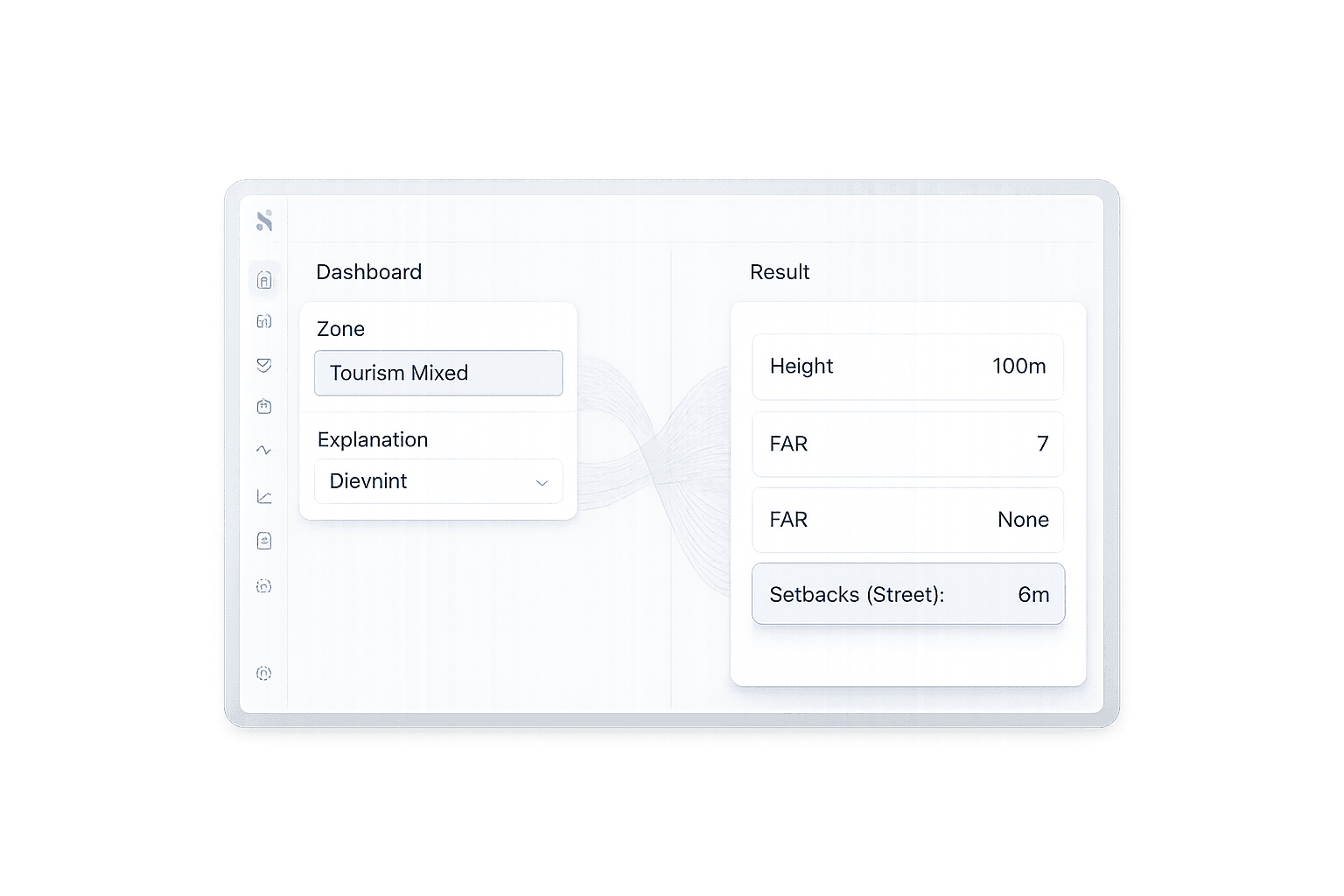
By referencing GIS databases and local planning codes, automated platforms aggregate key regulatory parameters:
-
Zoning & Land Use: Identifying permitted uses, floor-area ratios (FAR), and density caps.
-
Geometric Limits: Displaying setbacks, height envelopes, and topography contours.
-
Overlay Restrictions: Highlighting environmental protection zones, sanitary rules, or heritage preservation guidelines.
Each output cites its data source and applicability date, flagging areas that require statutory consultation.
- Comparing Scenario Yields and Cost Impacts Planning intelligence achieves maximum value when connected directly to preliminary design and cost models.
Teams can use pre-design feasibility testing to iterate through multiple development concepts instantly:
-
Yield Exploration: Test various building heights, gross floor areas (GFA), and unit mixes to evaluate yield options.
-
Financial Certainty: Link massing schemes directly to early cost estimation to compare conservative versus ambitious options.
- Creating a Traceable Decision Baseline The objective of automated feasibility tools is not to bypass statutory planning permission, but to organize critical data for better risk assessment.