Accelerating Early Stage Design with Concolabs WordtoBIM
Concolabs Editorial
Concolabs Editor

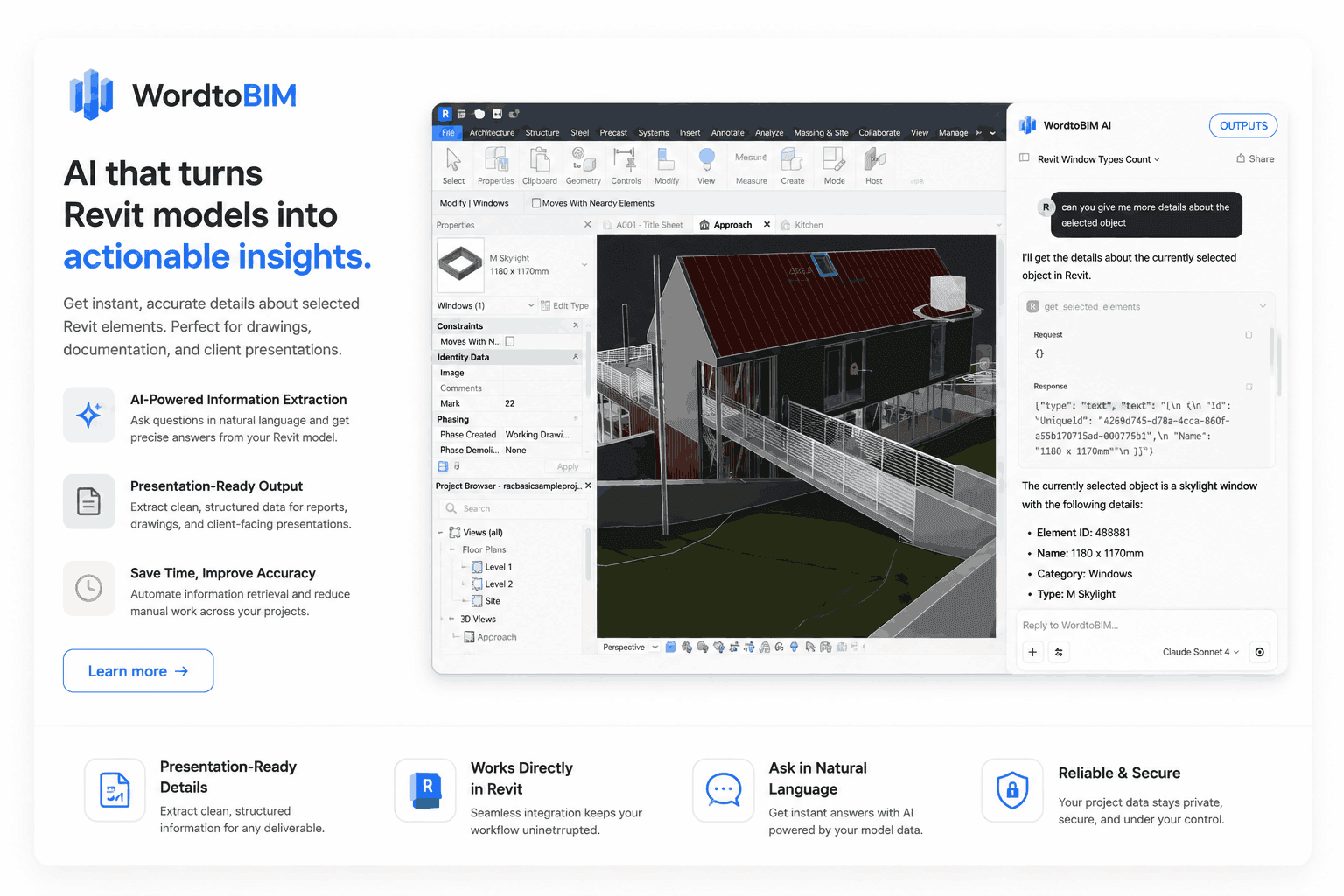
Concolabs WordtoBIM changes how architects approach initial modelling by allowing users to describe a building in plain text to generate a 3D model. This tool bridges the gap between conceptual intent and technical execution. By pulling live planning and regulatory information directly into the session, it ensures that early designs remain grounded in project-specific constraints.
Key Takeaways
- WordtoBIM converts text descriptions into accurate 3D building elements.
- The software automatically integrates live planning and regulatory data during the modelling process.
- Human professional judgment remains essential for final design validation and compliance checks.
- The workflow reduces time spent on repetitive initial modelling tasks.
How does WordtoBIM translate text into 3D geometry?
WordtoBIM functions by interpreting descriptive input regarding building elements or layouts. When an architect provides specific parameters, the Concolabs engine processes these requirements to construct the corresponding 3D geometry. This process removes the need for manual drafting of basic forms, allowing the team to focus on [INTERNAL-LINK: design iteration -> connected-construction-data-workflow-project-lifecycle] rather than repetitive geometry creation.
Integrating regulatory data into the modelling session
A core feature of WordtoBIM is its ability to pull live planning and regulatory information into the modelling session. As you describe a building, the software checks these constraints, ensuring that the generated model respects local zoning or height restrictions. This real-time feedback loop helps teams avoid [INTERNAL-LINK: planning pitfalls -> streamlining-site-feasibility-with-the-concolabs-planning-law-chatbot] early in the project lifecycle.
Can AI replace the need for professional architectural judgment?
No, AI cannot replace professional judgment. While WordtoBIM automates the generation of 3D models based on provided text, architects must verify that the output aligns with the project vision and safety standards. The tool serves as a productivity aid, not a substitute for the expertise required to manage complex architectural projects or [INTERNAL-LINK: site-specific challenges -> digital-site-measurement-payment-certificate].
Improving efficiency for modelling firms
Modelling firms often face bottlenecks during the early design phase. By using WordtoBIM, teams can rapidly prototype layouts. This speed allows for more options to be tested against regulatory requirements. The integration of live data means that the models generated are not just visual representations but are informed by the actual constraints of the site.
What are the limitations of text-to-model generation?
Text-to-model generation is limited by the specificity of the input and the complexity of the architectural intent. While it excels at standard building elements, highly bespoke or experimental geometries may still require manual intervention. Users should treat the output as a starting point for further refinement, ensuring all structural and aesthetic requirements are met before proceeding to later stages.
Pre-Modelling Input Checklist for WordtoBIM
- Define the primary building function clearly in text.
- Verify the site location for accurate regulatory data retrieval.
- List essential constraints such as maximum height or setbacks.
- Identify specific building elements required in the initial model.
- Review the generated model against local planning requirements.
- Document any manual adjustments made post-generation.
Evidence required before publishing: Evidence required before publishing: A screenshot of the WordtoBIM text-to-model interface, a brief case study from a partner architecture firm, and a verified list of supported regulatory data regions.
Frequently Asked Questions
What is WordtoBIM?
WordtoBIM is a Concolabs tool that allows architects to generate 3D building models by providing plain text descriptions of building elements or layouts. It is designed to speed up the early design phase by automating geometry creation.
Does WordtoBIM check for planning compliance?
Yes, WordtoBIM pulls live planning and regulatory information into the modelling session. It helps users understand constraints as they generate their models, though final compliance must always be verified by a qualified professional.
Is the output from WordtoBIM ready for construction?
No, the output is intended for the early design and conceptual modelling stages. Professional judgment and manual refinement are required to ensure the model meets all structural, safety, and project-specific requirements before it is used for construction.
Can I use WordtoBIM for any building type?
WordtoBIM is designed for general building elements and layouts. While it is versatile, its performance depends on the clarity of your text input and the complexity of the architectural requirements. [SOURCE REQUIRED: specific building type limitations].
How does this tool differ from manual modelling?
Traditional manual modelling requires drafting each element from scratch. WordtoBIM automates this by interpreting text, allowing architects to focus on design decisions rather than manual input, which significantly reduces the time spent on initial geometry creation.
What should the reader do next?
WordtoBIM offers a new way to handle early-stage modelling by combining text-based generation with live regulatory data. By integrating these capabilities, Concolabs helps firms work faster while staying informed about local constraints. To see how this fits into your existing workflow, visit /learnmore/wordtobim.
Review the workflow with the Concolabs team, confirm the required inputs and professional review points, then explore WordtoBIM.