FIDIC Contract Review AI: How Commercial Managers Spot Amended Risk Clauses Before Signing
Concolabs Editorial
Concolabs Editor

Introduction: Why Unamended FIDIC Contracts No Longer Exist
Across major infrastructure, energy, and high-rise commercial developments in the UAE/Dubai, Sri Lanka, and global emerging markets, the FIDIC suite (Red, Yellow, and Silver Books) remains the gold standard of international construction contracts. In theory, FIDIC contracts are admired for their balanced allocation of risk between the Employer and the Contractor.
In practice, however, almost every tender issued today arrives with 80 to 150 pages of Particular Conditions engineered to quietly dismantle that balance. Employers and their legal advisors routinely delete contractor protections, shorten strict notice time-bars, and shift ground condition or design liabilities onto the contractor.
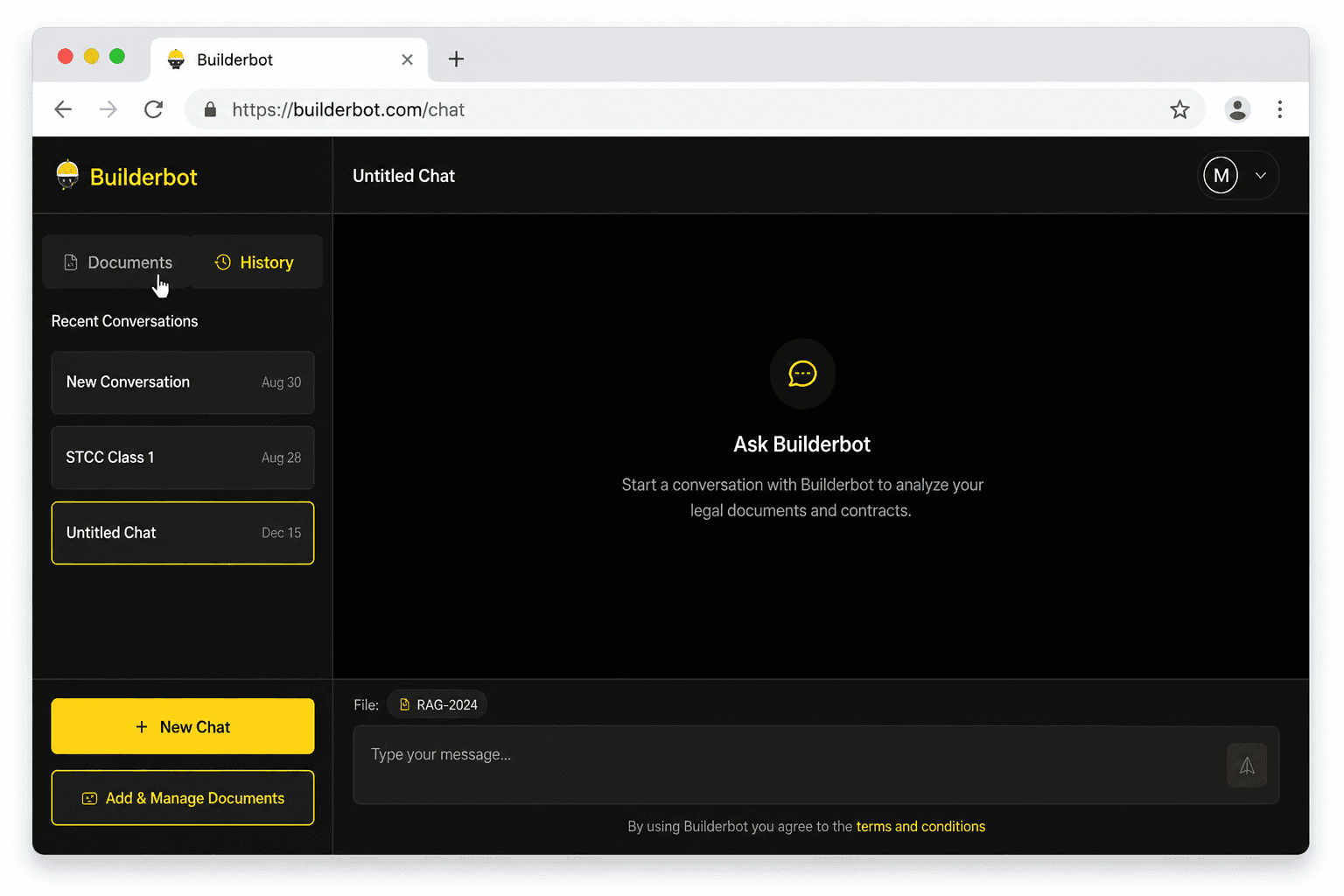
When a Commercial Manager is juggling multiple live tenders, reading 400 pages of dense legal prose line-by-line is nearly impossible. That is why FIDIC contract review AI—led by Concolabs’ BuilderBot.ai—has become an indispensable commercial shield for contractors and legal professionals.
1. Five Lethal FIDIC Particular Conditions That Trap Contractors
When BuilderBot.ai scans a tender contract package, it immediately hunts for high-risk amendments that routinely destroy contractor margins:
- Shortened Sub-Clause 20.2 Notice Time-Bars: Standard FIDIC gives the contractor 28 days to submit a Notice of Claim. Particular Conditions frequently slash this condition-precedent window to 7 or 14 days, making it virtually impossible for busy site teams to comply without automated tracking.
- Deletion of Sub-Clause 4.12 (Unforeseeable Physical Conditions): Employers often delete the contractor's right to time and cost relief when hitting uncharted rock, utilities, or contaminated ground—turning fixed-price tenders into geological gambles.
- Fitness-for-Purpose Design Traps in Yellow Book Contracts: Subtle wording edits in Particular Conditions can elevate a contractor's design duty from "reasonable skill and care" to strict "fitness for purpose," voiding standard Professional Indemnity (PI) insurance coverage.
- Capped Prolongation Costs on Employer Delays: Clauses that grant an Extension of Time (EOT) for client-caused delays while explicitly excluding time-related Prelim prolongation costs ("no damage for delay" clauses).
- Onerous Pay-When-Paid or Extended Certification Cycles: Amendments that stretch payment certification and release timelines from 56 days to 90 or 120 days, creating severe working-capital strain.
2. How BuilderBot.ai Audits a 350-Page FIDIC Contract in 3 Minutes
Unlike generic AI chatbots that summarize text superficially or hallucinate legal citations, BuilderBot.ai is trained specifically on construction contract baselines:
- Baseline Deviation Diffing: Compares the draft contract directly against standard FIDIC 1999 and FIDIC 2017 editions (as well as NEC4 and JCT), highlighting every deleted, added, or modified sub-clause in red.
- Plain-English Commercial Impact Scoring: Translates complex legal jargon into clear commercial risk ratings (High, Medium, Low) and generates ready-to-send Schedules of Tender Qualifications.
- Site-Ready Notice Checklists: Produces a concise operational matrix for Civil Engineers and Project Managers detailing every strict notice window and variation protocol.
3. Manual Legal Redlining vs. Concolabs BuilderBot.ai
| Contract Review Dimension | Traditional Manual Legal Review | Concolabs BuilderBot.ai Workflow | Commercial Advantage |
|---|---|---|---|
| First-Pass Contract Scan | 2–4 days of senior commercial/legal time | Under 3 minutes | 95% Faster Tender Review |
| Particular Conditions Diff | Manual side-by-side comparison with Red/Yellow Book | Automated clause-by-clause deviation highlight | Zero Missed Amendments |
| Tender Qualification Drafting | Writing commercial clarifications from scratch | AI-generated qualification & negotiation points | Stronger Pre-Contract Leverage |
| Post-Award Claim Defense | Disconnected legal and site records | Integrated with BuildMonitor App & Prelim | DAAB-Ready Contemporaneous Proof |
4. 4 Steps to De-Risk Your Next FIDIC Tender
- Upload the Tender Contract Suite: Drop the General Conditions, Particular Conditions, and Appendix to Tender into BuilderBot.ai.
- Run Automated Risk Analysis: Review the prioritized Risk Report highlighting liability shifts, LAD caps, and notice time-bars.
- Price Risk Contingencies: Feed identified commercial risks directly into Cost Plan Calculator + Financial Management and Prelim before submitting your bid.
- Deploy Site Compliance Rules: Share the extracted notice matrix with your site Civil Engineers and track daily progress via the BuildMonitor Mobile App.
Frequently Asked Questions (FAQ)
Can BuilderBot.ai review subcontracts as well as main FIDIC contracts?
Yes. Commercial managers use BuilderBot.ai both upstream (to audit main contracts from Employers) and downstream (to ensure domestic subcontracts mirror main contract obligations without back-to-back gaps).
How does BuilderBot.ai help avoid formal DAAB disputes?
By giving site and commercial teams instant clarity on notice requirements and variation valuation rules—and linking daily records via BuildMonitor Mobile App—contractors substantiate entitlements early and settle claims amicably before disputes escalate.
Never Sign an Amended FIDIC Contract Blind Again
Protect your company's balance sheet with 3-minute AI contract intelligence.
👉 Select "BuilderBot.ai" in the sidebar right now to test our AI on your live contract documents.